
Learn how to start an LLC in the USA in 2026 with this step-by-step guide. Discover filing costs, legal requirements, tax benefits, and expert tips for success.
Starting a business is an exciting milestone, but it also comes with important decisions. One of the biggest is choosing the right legal structure for your company. If you’re like many entrepreneurs across the United States, forming a Limited Liability Company (LLC) is likely one of the best options to consider.
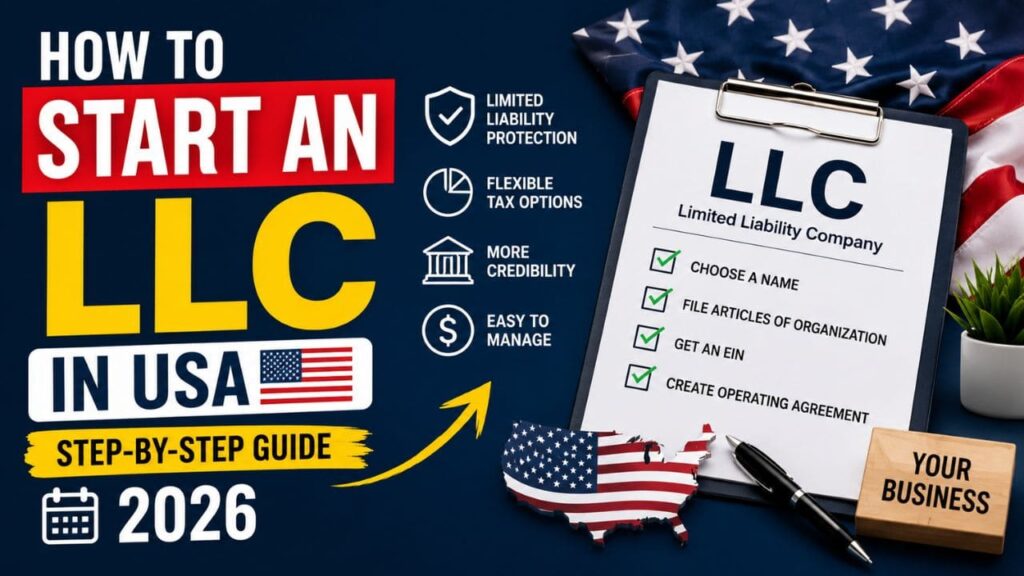
An LLC offers a practical balance of legal protection, tax flexibility, and simple management. Whether you’re opening an online store, launching a consulting business, freelancing full-time, or turning a side hustle into a real company, an LLC can help protect your personal assets while making your business look more professional and credible.
The good news is that creating an LLC isn’t nearly as complicated as many first-time business owners think. Once you understand the process, you can complete each step with confidence. In this guide, you’ll learn exactly how to start an LLC in the USA, what documents you’ll need, how much it may cost, and a few common mistakes that are easy to avoid.
What Is an LLC?
A Limited Liability Company, commonly known as an LLC, is a business structure recognized in every U.S. state. One of its biggest advantages is that it creates a legal separation between you and your business.
Table of Contents
In simple terms, if your business faces a lawsuit or financial debt, your personal belongings—such as your home, savings, or personal vehicle—are generally protected. While no business structure can eliminate every risk, an LLC provides an important layer of protection that many entrepreneurs value.
Compared with a corporation, an LLC usually involves less paperwork and fewer ongoing formalities. At the same time, it offers much stronger legal protection than operating as a sole proprietor. That’s one of the main reasons millions of small business owners choose this structure every year.
Why Start an LLC in 2026?
Starting an LLC isn’t just about checking a legal box. It’s about giving your business a solid foundation from day one.
Some of the biggest benefits include:
- Protecting your personal assets from many business liabilities.
- Flexible tax options that can grow with your business.
- Building trust and credibility with customers and clients.
- Making it easier to open business bank accounts and apply for financing.
- Creating a more professional image for your brand.
- Enjoying simpler management compared with many other business structures.
If you’re serious about building a business that lasts, forming an LLC is often a smart investment early in your journey.
Step 1: Choose a Business Name
Your business name is often the first impression customers will have of your brand, so it’s worth taking the time to choose carefully.
Before you register your LLC, make sure your chosen name:
- Is available in your state.
- Includes “LLC” or “Limited Liability Company.”
- Doesn’t include restricted words like “Bank” or “Insurance” unless your state allows them.
Choose a name that’s easy to remember, simple to spell, and closely connected to what your business offers.
Pro Tip
Before filing your paperwork, it’s a good idea to check a few extra things:
- Is the website domain available?
- Can you secure matching social media usernames?
- Are there any existing trademarks that could create problems later?
Spending a little extra time now can save you from an expensive rebrand in the future.
Step 2: Decide Where to Register Your LLC
You’ve probably heard that states like Delaware, Wyoming, and Nevada are great places to form a business. While those states do offer certain advantages, they’re not automatically the best choice for everyone.
For most small business owners, registering an LLC in the state where they live and actually conduct business is the simplest and most affordable option. Registering in another state can create extra paperwork, additional fees, and ongoing compliance requirements.
Unless you have a specific legal or investment reason to register elsewhere, staying local is usually the smartest move.
Step 3: Choose a Registered Agent
Every LLC must have a Registered Agent.
This person or company receives important legal notices and official government documents on behalf of your business.
Your Registered Agent can be:
- Yourself (if your state allows it)
- A trusted friend or family member
- A professional Registered Agent service
Many entrepreneurs choose a professional service because it helps protect their privacy and ensures someone is always available to receive important documents during business hours.
Step 4: File Your Articles of Organization
This is the paperwork that officially creates your LLC.
You’ll submit the Articles of Organization to your state’s business filing office, which is usually the Secretary of State.
You’ll typically provide:
- Your LLC’s legal name
- Business address
- Registered Agent information
- Management structure
- Organizer details
Most states now allow online filing, making this step faster than ever.
Step 5: Pay the Filing Fee
Every state charges a filing fee to register an LLC.
Depending on where you form your business, you’ll usually pay somewhere between $50 and $300.
Keep in mind that some states also require annual reports or renewal fees to keep your LLC in good standing.

Although there’s an upfront cost, forming an LLC remains one of the most affordable ways to legally protect your business.
Step 6: Create an Operating Agreement
Even if your state doesn’t require one, creating an Operating Agreement is a smart decision.
Think of it as your company’s internal rulebook.
It explains:
- Who owns the business
- How profits are shared
- Voting rights
- Management responsibilities
- What happens if an owner leaves
- How important decisions will be made
Even if you’re the only owner, having this document helps show that your business operates independently from your personal finances.
Step 7: Apply for an EIN
An Employer Identification Number (EIN) is your business’s federal tax ID issued by the IRS.
You’ll usually need one to:
- Open a business bank account
- Hire employees
- File business taxes
- Apply for licenses and permits
- Build business credit
The best part? Applying for an EIN is completely free, and in many cases, you can receive it quickly after submitting your application.
🔔 Connect With Us
Stay updated with the latest Update,
👉 Join us on WhatsApp – Link
👉 Join our Telegram Channel – Link
👉 Follow us on X (Twitter) – Link
👉 Follow us on Instagram – Link
👉 Like our Facebook Page – Link
👉 Follow us on Threads – Link
Frequently Asked Questions
1. What Is an LLC?
A Limited Liability Company (LLC) is a legal business structure that protects your personal assets from most business debts and lawsuits. It also offers flexible tax options and requires less paperwork than a corporation, making it one of the most popular business structures in the United States.
2. How Do I Start an LLC in the USA?
To start an LLC, choose a unique business name, appoint a registered agent, file your Articles of Organization with your state, pay the required filing fee, create an Operating Agreement, and apply for an Employer Identification Number (EIN) if needed. Most states allow you to complete the process online.
3. How Much Does It Cost to Start an LLC?
The cost of starting an LLC varies by state, but most filing fees range from $50 to $300. Some states also charge annual report fees or franchise taxes to keep your LLC active and compliant.
4. Do I Need an EIN for My LLC?
Yes, many LLCs need an Employer Identification Number (EIN). You’ll typically need one to open a business bank account, hire employees, file federal taxes, and apply for business licenses. The IRS issues EINs for free.
5. Can I Open a Business Bank Account with an LLC?
Yes. Once your LLC is officially registered and you have an EIN, you can open a business bank account. Keeping your personal and business finances separate helps maintain your liability protection and makes accounting much easier.
6. Do I Need a Business Address for My LLC?
Yes. Every LLC must provide a business address when registering with the state. Depending on your business, you can use a physical office, your home address (if permitted), or a virtual business address to receive official mail and maintain a professional business presence.
You may also like –
Best AI Tools for Small Businesses in 2026: Top AI Software to Boost Productivity
How to Save $10,000 in One Year: A Step-by-Step Guide for Americans
25 Best Side Hustles for Students in the United States to Make Extra Money in 2026
UK Invests £219 Million to Accelerate Sustainable Aviation Innovation
How to Start Investing With $100: A Beginner’s Guide to Building Wealth in 2026