
Britain launches a £219 million green aviation fund to boost sustainable aviation fuel production, cut emissions, create jobs, and support net-zero goals.
The UK government has unveiled a major £219 million funding package designed to strengthen the country’s sustainable aviation fuel (SAF) industry, reduce carbon emissions from air travel, and create thousands of skilled jobs over the coming decades.
The investment marks one of the largest commitments to low-carbon aviation technology in Britain and is expected to help establish the country as a leading center for sustainable fuel production.
New Funding Available for Innovative UK Companies
A significant portion of the funding, worth £93 million, will be made available over the next two years to businesses developing low-carbon fuel technologies. Applications are scheduled to open in July, with priority given to projects that are closest to reaching commercial production.
Table of Contents
The initiative forms part of the newly created Low Carbon Fuels Fund (LCFF), which aims to support the transition away from conventional fossil fuels and encourage the growth of cleaner alternatives for the aviation sector.
Building a Stronger Sustainable Aviation Industry
The government believes expanding domestic sustainable aviation fuel production will help strengthen energy security, attract private investment, and support long-term economic growth.
Officials estimate that a mature SAF industry could contribute around £5 billion to the UK economy by 2050 while supporting approximately 15,000 jobs across manufacturing, engineering, construction, and scientific research.
The latest funding follows previous government support for advanced fuel technologies, demonstrating a continued commitment to decarbonizing one of the world’s most challenging industries.
Why Sustainable Aviation Fuel Matters
Aviation remains a significant source of greenhouse gas emissions globally. While electric and hydrogen-powered aircraft are still under development, sustainable aviation fuel is currently viewed as one of the most practical solutions for reducing the environmental impact of flying.
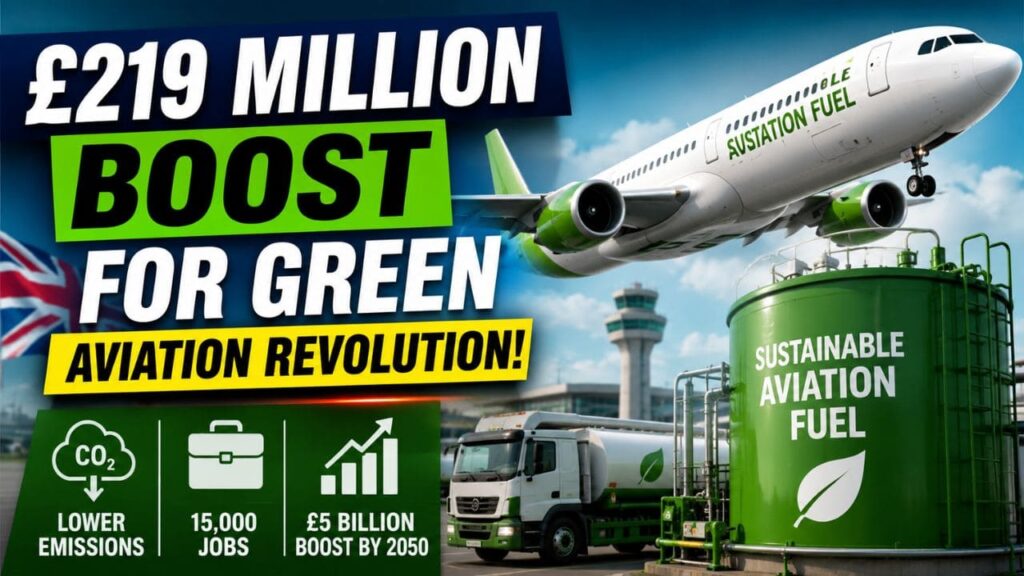
Produced from renewable materials and waste-based feedstocks, SAF can significantly lower lifecycle carbon emissions compared with traditional jet fuel. As airlines and governments pursue net-zero targets, demand for these cleaner fuels is expected to grow rapidly in the coming years.
Supporting Jobs and Economic Growth
Beyond environmental benefits, the government’s investment is expected to create new employment opportunities throughout the UK.
From fuel production facilities and engineering projects to research laboratories and construction sites, the expanding sustainable aviation sector could generate thousands of high-skilled positions.
The government also sees the industry as an opportunity for young people to enter fast-growing fields focused on clean energy and advanced manufacturing technologies.
Review of Future Fuel Targets
Alongside the funding announcement, policymakers have launched a consultation aimed at gathering industry feedback on the future development of the Sustainable Aviation Fuel Mandate.
The mandate requires an increasing share of aviation fuel supplied in the UK to come from sustainable sources, with targets rising gradually over the coming decades.
The review will help officials assess future fuel availability, market conditions, and investment requirements while ensuring the UK remains on track to achieve its climate objectives.
Industry Responds Positively
Companies involved in sustainable fuel development have welcomed the government’s latest commitment.
Several businesses developing SAF projects across the UK said the funding could accelerate commercial deployment, support innovation, and provide greater confidence for long-term investment decisions.
Industry leaders also emphasized that stable government policy will be critical for scaling production capacity and attracting additional private-sector funding.
Looking Ahead
The £219 million investment represents another important step in Britain’s effort to build a cleaner and more competitive aviation industry. By supporting innovative technologies and expanding sustainable fuel production, the UK hopes to reduce aviation emissions while creating new economic opportunities nationwide.
As global demand for low-carbon aviation solutions continues to increase, Britain’s latest funding initiative could help position the country at the forefront of the sustainable aviation market for years to come.
🔔 Connect With Us
Stay updated with the latest Update,
👉 Join us on WhatsApp – Link
👉 Join our Telegram Channel – Link
👉 Follow us on X (Twitter) – Link
👉 Follow us on Instagram – Link
👉 Like our Facebook Page – Link
👉 Follow us on Threads – Link
frequently asked questions (FAQs)
Q1. What is Sustainable Aviation Fuel (SAF)?
Sustainable Aviation Fuel (SAF) is an alternative jet fuel made from renewable and sustainable sources. It can significantly reduce greenhouse gas emissions compared to traditional fossil-based aviation fuel.
Q2. How is Sustainable Aviation Fuel made?
SAF is produced from renewable feedstocks such as used cooking oil, agricultural waste, forestry residues, municipal waste, and other sustainable materials through advanced conversion technologies.
Q3. What is Sustainable Aviation Fuel made of?
Sustainable Aviation Fuel is commonly made from waste oils, animal fats, crop residues, forestry waste, and other renewable resources that can be converted into low-carbon jet fuel.
Q4. Why is Sustainable Aviation Fuel important?
SAF helps reduce aviation’s carbon footprint, supports net-zero climate goals, and provides a practical way for airlines to lower emissions without replacing existing aircraft.
Q5. How much can Sustainable Aviation Fuel reduce emissions?
Depending on the feedstock and production process, SAF can reduce lifecycle greenhouse gas emissions by up to 70% or more compared to conventional jet fuel.
Q6. Which airlines are using Sustainable Aviation Fuel?
Several major airlines, including Alaska Airlines and other global carriers, are investing in and using Sustainable Aviation Fuel to support their sustainability and emissions-reduction goals.
Q7. What are the benefits of Sustainable Aviation Fuel for the aviation industry?
SAF helps airlines meet environmental targets, supports cleaner air travel, encourages innovation, and creates new economic opportunities in fuel production and manufacturing.
Q8. Can Sustainable Aviation Fuel replace conventional jet fuel completely?
SAF can be blended with conventional jet fuel and used in existing aircraft engines. As production scales up, it has the potential to replace a significant share of traditional aviation fuel.
You May Also Like –
How to Start Investing With $100: A Beginner’s Guide to Building Wealth in 2026